
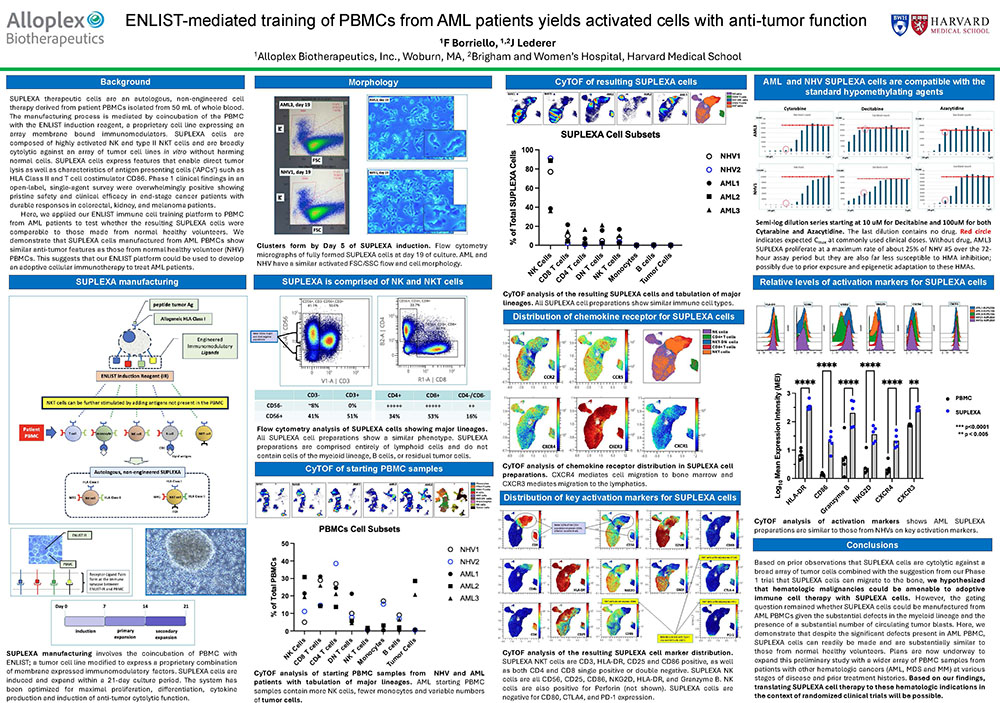
Based on prior observations that SUPLEXA cells are cytolytic against a broad array of tumor cells combined with the suggestion from our Phase 1 trial that SUPLEXA cells can migrate to the bone, we hypothesized that hematologic malignancies could be amenable to adoptive immune cell therapy with SUPLEXA cells.
However, the gating question remained whether SUPLEXA cells could be manufactured from AML PBMCs given the substantial defects in the myeloid lineage and the presence of a substantial number of circulating tumor blasts.
Here, we demonstrate that despite the significant defects present in AML PBMC, SUPLEXA cells can readily be made and are substantially similar to those from normal healthy volunteers.
Plans are now underway to expand this preliminary study with a wider array of PBMC samples from patients with other hematologic cancers (AML, MDS and MM) at various stages of disease and prior treatment histories. Based on our findings, translating SUPLEXA cell therapy to these hematologic indications in the context of randomized clinical trials will be possible.